

collaborating with clients and communities for greater impact
Our Clients
Nonprofit clients
Government clients
Our Experience
We’re pleased to announce the Municipal Equity Kickstart Guide won a gold award from the Planning Institute of British Columbia for Excellence in Policy Planning City + Urban Areas at the 2024 conference. Thank you YWCA for choosing Resilience Planning to collaborate with on this valuable resource!
”The jury found this to be an exemplary guide, daylighting issues that have been identified for a long time but not taken seriously. It is a true quick-start guide which is highly transferrable, as evidenced through adoption by several municipalities.”
You can access the Municipal Equity Kickstart Guide here.
Featured Projects
BC-wide research framework for collecting the lived experiences of homelessness in Indigenous communities
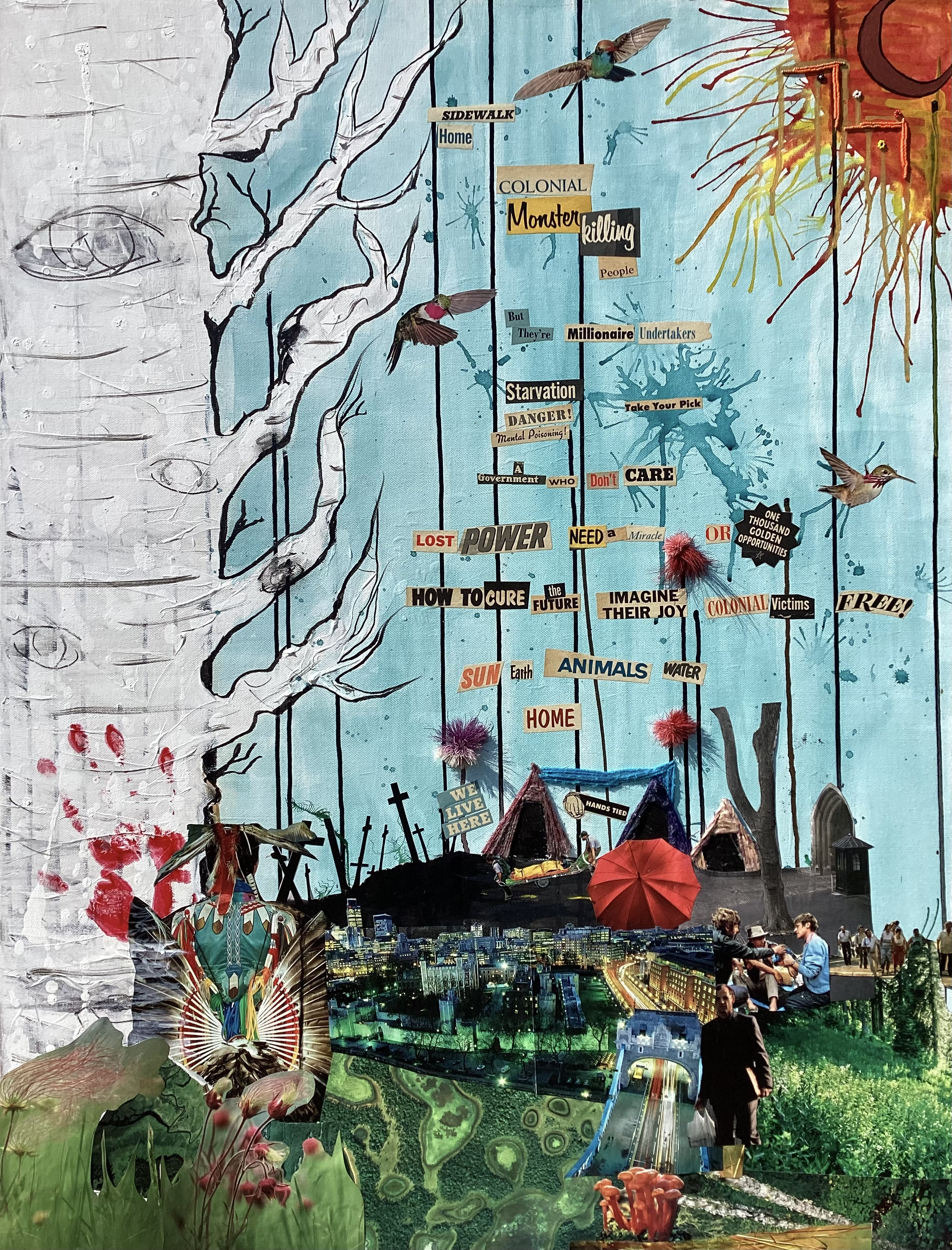
Title: You Need a Lot of Luck in this Business
Artist: Justene Dion-Glowa (Métis, Winnipeg Region)
The BC Indigenous Homelessness Strategy Steering Committee (the steering committee) engaged Resilience Planning to co-develop an Indigenized data collection framework. The goals for this project were two-fold:
A replicable data collection framework with documentation of its implementation, shared with tools, resources, and recommendations based in lessons learned; and
To provide to the steering committee, recommendations to help address, alleviate and eradicate experiences of homelessness and housing insecurity in BC Indigenous communities.
This process to collect evidence (data, stories, knowledges) was rooted in multiple Indigenous values and wise practices, engaged directly with Indigenous Community co-researchers, and trusted in the wisdom of Indigenous Peoples With Lived Experience (PWLE). The Indigenous lived experience co-research process centred Indigenous Peoples’ past (lived) and present-day (living) experiences of homelessness and housing insecurity in BC. Our guiding principle was to deliver this work "by, for, and with Indigenous communities."
Our practices to Indigenize and embed equity in the process included:
Hiring in-community, co-researchers with lived and living experience (and paying them more than a living wage);
Listening early in the project to the needs of the community members and urban Indigenous members to ensure we are co-creating processes that protect and enhance the cultural values and traditions through respect, equality, and harmony for all;
Acknowledging the power over decisions Indigenous Peoples have on the project process and outcomes;
Respecting community needs by being flexible and willing to pivot to accommodate them;
Honouring time and wisdom with reciprocity through an honorarium payment;
Listening with humility and flexibility;
Being responsive and supportive for co-researchers and participants;
Designing engagement activities and materials “by, with and for” Indigenous communities; and
Opening and closing discussion circles in a good way with culturally responsive blessings, songs and prayers.
Impact: the data collection framework can be replicated at small or large scale and across topics of experience (i.e., including experiences of homelessness and beyond). Recommendations informed an update to the provincial-wide housing strategy to address experiences of homelessness in Indigenous communities. This was also endorsed by the BC First Nations Housing and Infrastructure Council.
“I commend [resilience Planning]. Got a lot of data and information that wasn’t heard before. Wasn’t heard because a normal business man wouldn’t be out in the bush looking for people who are camping to get that survey filled out. ”
Equity Framework
Lisa led a team to work with the City of Victoria to develop an Equity Framework to help guide embedding equity in the municipalities work across departments and in relationship with the residents the municipality serves. The project included:
A community profile where we selected 19 equity data indicators and mapped them across the city to see where inequities existed;
Workshops with Senior Leadership Team to raise their awareness and build capacity to embed equity in work;
Staff interactive training and information sessions about: equity, intersectionality, positionality, explanation for how to use and employ the outcomes of the community profile, overview of Targeted Universalism;
An audit of the budgeting process and training for staff to embed and name equity in their budget packages to Council; and
Based on “Community Conversations” with non-profit community-serving organizations, we made recommendations for improvements to the City’s Participatory Budgeting Process.
The Equity Framework is guided by the principles of decolonization, anti-racism, disability justice, gender diversity, and dignity; and articulates pillars to embed equity that include: capacity building; relationship building; evidence-based decision making; and dismantle system inequities. Included for staff was a toolkit to help with approach as well as worksheets with step-by-step resources and questions to consider for each stage of a project. The work encourages the City to build a community of practice to implement the work.
The Framework was endorsed by Council in June 2022.
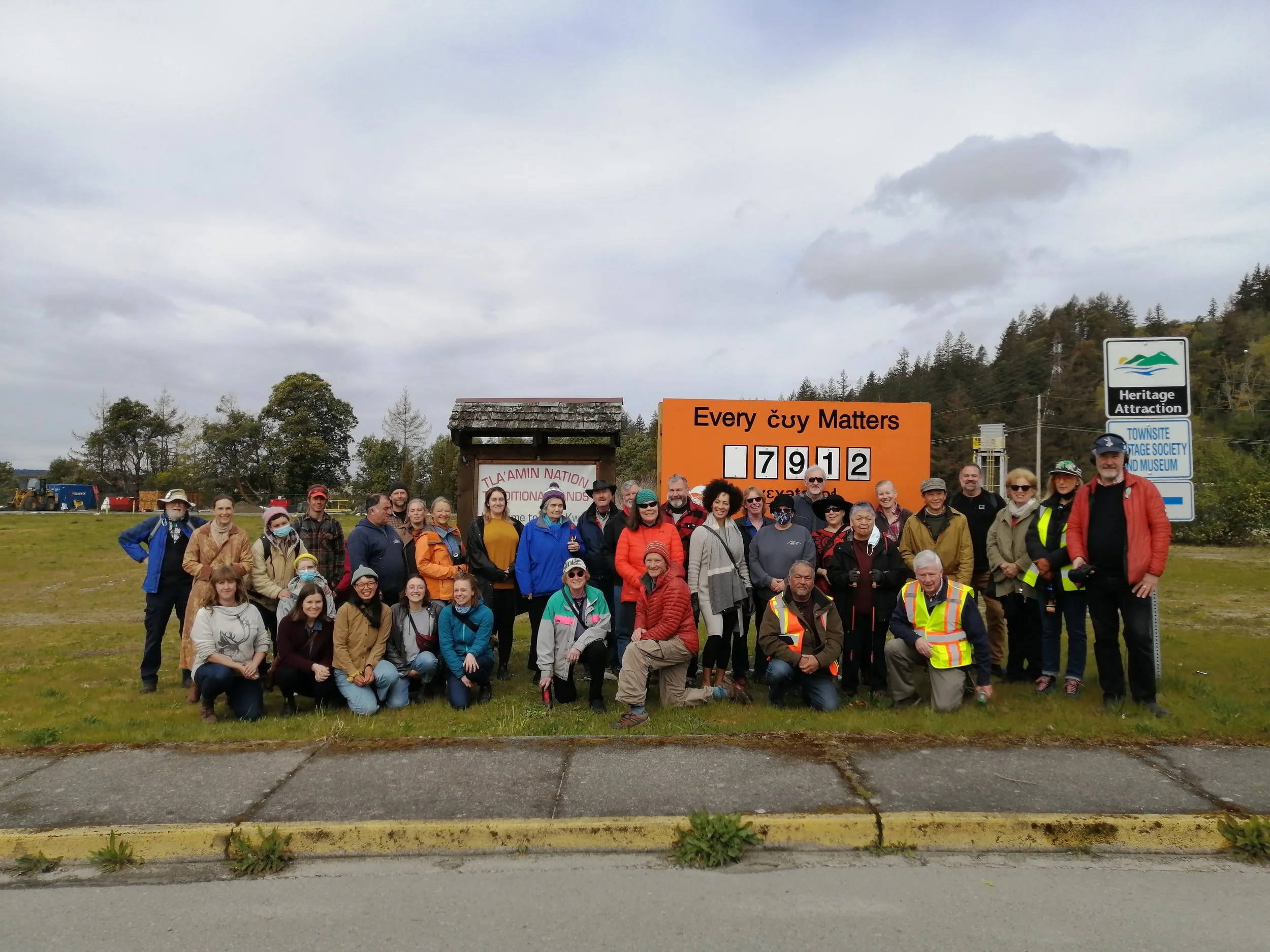
Possible Name Change Process
In 2022, Lisa Moffatt co-led (with another local facilitator) a possible name change process for the City of Powell River based on a request from ɬəʔamɛn First Nation Hegus. The City is named after former Superintendent of Indian Affairs, Israel Powell (1872-1889) who was instrumental in bringing residential schools to BC, banning the potlatch, and stealing and selling commemorative cultural and ceremonial artifacts, leading to ongoing intergenerational trauma for the ɬəʔamɛn People. This project is the first of its kind in Canada.
The objectives for the project were to:
Foster positive conversations between residents about the values we share in a way that builds unity and pride.
Develop a shared understanding amongst residents of the harms and negative effects of colonialism, past and present.
Deepen understanding, commitment and pride amongst residents about truth, justice, and reconciliation in action.
Develop greater community consensus and understanding about the role of place naming in building a more welcoming and inclusive community.
Communicate to residents why consideration of a name change is important for our shared commitment to reconciliation.
The project was emergent and involved directly responding to engagement outcomes with new avenues for people to learn about the time immemorial and settler history of the area, the ongoing impacts of settler colonialism, how places are named, and to share their thoughts, ideas and articulate shared values in a way that builds unity and pride.
A report from the co-leads on the project was endorsed by ɬəʔamɛn Nation and was referred to incoming council by Powell River City Council.
You can learn more about the project and find the final reports here.
Other Project Experience
Housing
Homelessness Needs Assessment + Community Plan, Comox Valley Regional District (2024 - 2025)
Housing Needs Assessment + Action Plan, City of Rossland (2024 - 2025)
Housing Needs Assessment, Town of Olds, AB (2024 - 2025)
BC-wide research framework for collecting the lived experiences of homelessness in Indigenous communities, Aboriginal Housing Management Association + Steering Committee of 20 Indigenous leaders providing services across BC (2021 - 2022)
Housing Needs Assessment, City of Castlegar (2022 - 2023)
Social and Economic Impact Assessment, City of Castlegar (2022-2023)
Housing needs assessments for the Towns of High River and Black Diamond, AB, Westwards Communities (2021 - 2022)
Housing implementation plan, City of Powell River (2022)
Housing Strategy, City of Castlegar (2020 - 2021)
Affordable housing strategy, 5-year action and implementation, Town of Okotoks (2021)
Equity
Workshops with people with disabilities about their experiences in the health care system, Ministry of Health (BC) (2026)
Interviews with lower mainland local governments to inform equity training requirements for municipalities, YWCA (2024 - 2025)
Municipal Equity Kickstart Guide, YWCA (2022 - 2023)
Vital Signs, Powell River Community Foundation (2022 - 2023)
Equity training, Vancouver Coastal Health and the Greater Victoria Housing Society (2022)
Equity Policy, Britannia Childcare Services (2021-2022)
Equity and Climate Action Toolkit, City of Surrey (2020 - 2021)
Social and Cultural Impact Assessment (Broadway Area Plan), City of Vancouver (2019 - 2021)
Plaza Stewardship Strategy, City of Vancouver (2019)
Accessibility assessment, Evergreen Rapid Transit Line*, City of Coquitlam (2008)
Health and social services needs assessment, Regional Municipality of Niagara* (2009)
Climate Action
Equity and Climate Action Toolkit, City of Surrey (2020 - 2021)
Whole Systems Infrastructure Plan, UBC’s Okanagan* (2015) (Canada’s first)
Prevent pollution, Metro Vancouver* (2018)
Water Shortage Response Plan, Metro Vancouver* (2015)
Strategic + Long-Term Planning
Strategic plan, Pathways Abilities Society (2022)
Municipal Development plan, Town of Okotoks (2018 - 2021)
Strategic plan, Kootenay Society for Community Living (2021 and again in 2025)
Others
Communication and engagement policy, qathet Regional District (2021 - 2022)
Leadership coaching, Town of Okotoks Council (2019 - 2021)
Rezoning of the Coquitlam Shopping Centre (60-acre rezoning), Morguard Investments Ltd. (2018 - 2022)
Budget Engagement, City of Vancouver (2020 and 2022)
Smart Cities Challenge (Industry Canada), City of Surrey and the City of Vancouver (successfully won the $250,000 short-list prize)* (2018)
Informing Strategic Transportation Plans in cities across British Columbia including: Prince George, Coquitlam, Port Moody, Abbotsford* (various dates)
Leading major head office facility programs for TransLink’s new head office and the City of Surrey’s new City Hall and redesign of the Edmonton Federal Building* (various dates)
Creation of a facility program for a family crisis shelter and transition multi-unit building in Fort McMurray, AB* (2009-2010)
*Lisa Moffatt’s career work completed prior to founding Resilience Planning
“Lisa... did a fantastic job in preparing for and executing the [joint city senior staff] workshop. The project has challenged us with very short time periods and had the requirement for several last-minute changes. [Lisa] tackled the actions in a highly professional manner, provided excellent attention to details, kept everyone highly engaged and on track for successful workshop outcomes. [Her] selection of exercises produced wonderful synergies amongst the participants. Great work!
”
Resilience Planning is a proud member of Women Transforming Cities and financial supporter of the Indian Residential School Survivors Society, Downtown Eastside Women’s Centre and the David Suzuki Foundation.