
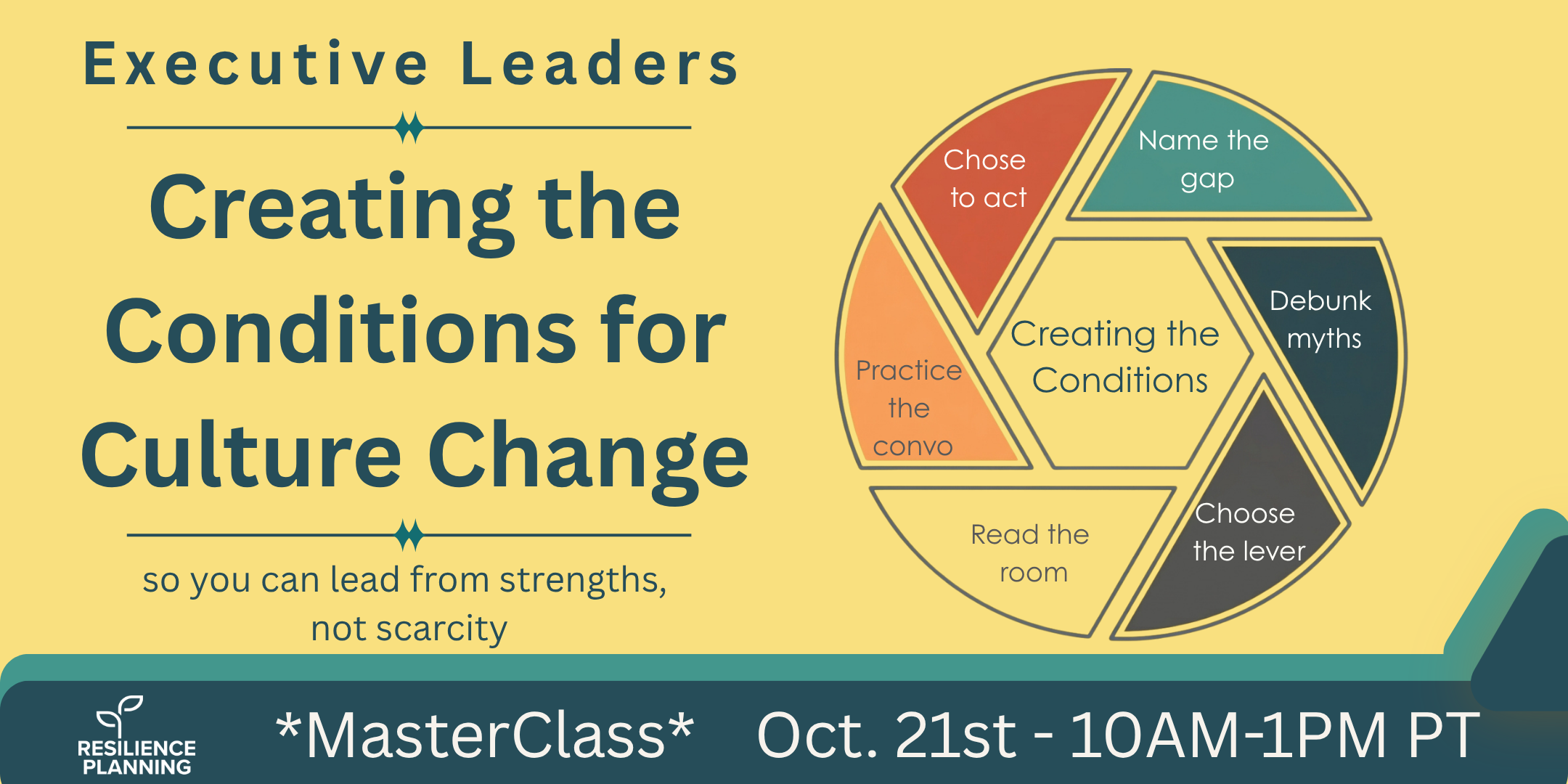
Creating the Conditions for Culture Change:
a MasterClass for building psychological safety at work
This 3.0 hour masterclass is for you if you are ready to create the conditions for your teams’ potential to be revealed so you can have a positive culture shift that sticks.
3.0 hour interactive masterclass where you practice the tools I teach and leave with real actions you can implement immediately. ($397 value)
A 1:1, 1.0 hour coaching session with me after the workshop to support you with a goal you have for your team. We’ll come up with a plan and resources for you to proceed with confidence. ($247 value)
You’ll also get the conditions playbook with the tools taught in the workshop so you can dive deeper and continue to use them. This is a resource you will come back to time and time again. ($47 value)
MasterClass price for PIBC members is $397 (42% off the value).
In this class you will:
Dispel the four myths of psychological safety.
Understand the levers that fix culture.
Apply the four-lane framework to courageous conversations so you can affect change.
A framework that guides a lot of how I am: what you pay attention to grows.
So, what will you pay attention to?
About your facilitator…
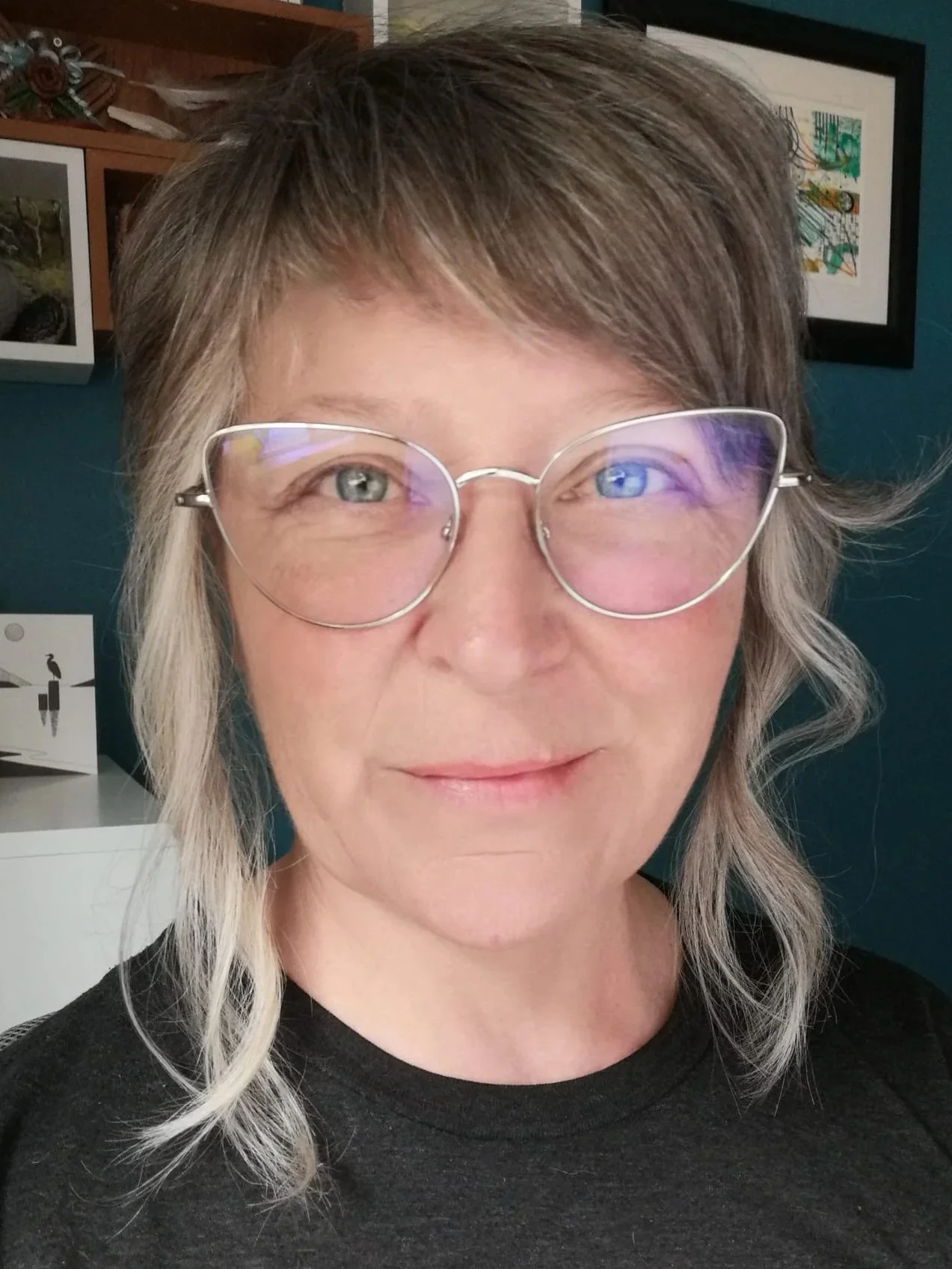
Lisa Moffatt, MA, CEC, MCIP, RPP
I'm Lisa (she/her), an uninvited settler living and working on the unceded territory of the ɬaʔamɩn First Nation, and a Certified Executive Coach, planner, and facilitator with over 20 years of experience partnering with nonprofit and local government leaders.
My work sits at the intersection of coaching, planning, and equity, bringing curiosity, honesty, and deep care to every room I'm in, along with an awareness of who isn't in it.
When you work with me, you'll feel genuinely seen, not just as a professional, but as a person, and you'll leave our conversations knowing something about yourself you didn't know going in.
I hold a high bar for the work while staying grounded in the humans doing it, and my awareness of systems isn't a disclaimer, it shapes how I see problems and where I look for solutions. That's the part that never gets old for me.
Past offerings
Overview
Today’s leaders face a changing landscape marked by generative AI, dynamic political risks, and compressed leadership pipelines—all while navigating burnout and systemic scarcity. When uncertainty strikes, standard management playbooks often fall back on control, unintentionally silencing the exact brilliance teams need to navigate complex challenges.
Join certified coach, award-winning business owner, and community leader Lisa Moffatt for an engaging, high-impact webinar designed specifically for executive and nonprofit leaders. In this interactive session, you will learn how to shift your leadership approach from high-stress firefighting to cultivating a high-trust, resilient team culture.
What You Will Learn
Using her proven See It. Shift It. Sustain It. framework, Lisa breaks down the three foundational conditions required to move your team from silence and disengagement to psychological safety and shared strength:
Condition 1: Awareness (See It) — Identify hidden engagement gaps, performative meetings, and the subtle ways scarcity mindsets silence your team.
Condition 2: Safety (Shift It) — Discover why high-performing teams report more mistakes, not fewer, and learn one simple meeting shift you can use immediately to surface the truth.
Condition 3: Reinforcement (Sustain It) — Build structural, relational habits that ensure psychological safety lasts past a single week and creates measurable, long-term impact.
Who Should Attend?
Executive Directors & C-Suite Leaders managing tight budgets, shifting demands, and high-pressure missions.
Senior Managers & Department Heads experiencing staff disengagement, retention challenges, or burnout.
Board Members & Organizational Leaders seeking to build healthier, equity-informed, and highly collaborative workplace cultures.
“Lisa’s training came at exactly the right time for me. I was in tears because I felt so seen and understood.”
What you’ll learn
A free live training for nonprofit and organizational leaders who are done sending managers to another workshop and done asking their people to be more resilient, and ready to find out what's actually producing the disengagement on their team.
You'll leave with three practical tools you can use this week, not theory:
1. Read the Gap Honestly — a simple exercise to see the real distance between what your organization says it values and how it actually operates
2. Build the Conditions for Psychological Safety — three research-backed behaviours, grounded in Amy Edmondson's work and Google's Project Aristotle, that make it safe for your team to speak up
3. Have the One Courageous Conversation You've Been Avoiding — a framework for finally addressing the conversation everyone knows needs to happen
All three come from the framework at the heart of my work: See It. Shift It. Sustain It.
This isn't a sales pitch. It's a real training with real tools, and yes, at the end I'll share how to go deeper if it resonates.
Come ready to be honest about what you've already tried. Come ready to see your team differently.
You don't have a people problem. You have an undiagnosed one.
You don't have a people problem. You have an undiagnosed one.
There is a specific kind of tired moving through nonprofit and local government leadership right now, and it is different from the burnout everyone has been naming for the last five years.
This one shows up on a Sunday night, scrolling through Monday's agenda. It sounds less like "I am exhausted" and more like "why does it feel like I'm the only one who still cares about this place."
You've done the work. You've run the retreats, held the check-ins, rewritten the values statement, maybe even brought in a consultant. And still: meetings that feel performative, your best people going quiet, a culture that seems to be slipping no matter how hard you personally hold on to it.
Here's a different diagnosis than the one you've probably been given.
The world your team is working in didn't exist five years ago
You're leading inside forces that are reshaping what leadership even asks of you: AI is compressing the analytical work that used to define your value, geopolitical instability that's no longer background noise, and flattened organizations that hand people leadership roles with less opportunities for the preparation to grow into them. The playbook you inherited was never built for this moment.
And the data backs up what you're feeling. Global employee engagement dropped to 20% last year, the lowest since 2020, and the first time it's declined two years running. That cost the world economy $10 trillion in lost productivity. Roughly 4 out of 5 employees are not giving their best work.
But when managers actively support their teams, people are almost 9 times as likely to report meaningful transformation at work. And engaged leaders are 14% more likely to be thriving in their own lives, too. Engagement isn't a nice-to-have. It's good medicine, for your team and for you.
Three defaults you inherited, not three mistakes you're making
Most advice on disengagement asks you to fix the manager or fix the employee, as if the problem is a skills gap. It's usually neither. It's the system underneath both of them. In this training, we'll name three defaults that quietly produce disengagement in almost every organization:
Treating a systemic problem like a people problem
Mistaking quiet in the room for agreement
Making changes that don't survive past the initial enthusiasm
None of these mean you're doing it wrong. They mean you've been working without the right map. And I’ll share that map in this session.
We do offer this course for time to time. Reach out if you want to join our mailing list.
Beyond Consultation: Co-creating Equitable Communities
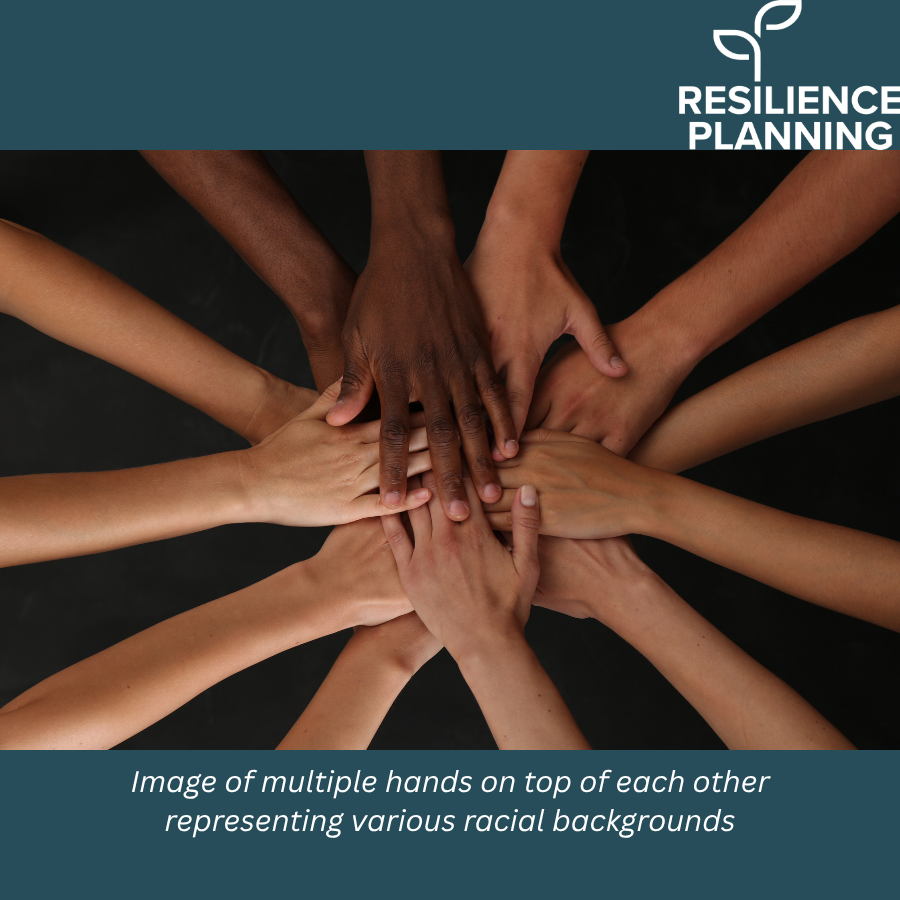
Image of multiple hands on top of each other representing various racial backgrounds
Details
Dates: April 28, May 5, May 12 from 10am to Noon PDT
Virtual: Course will be offered over Zoom
Payment: $299CAD per person (+ GST for those in Canada), includes toolkit and all three sessions
Registration due: April 24, 5:00pm
Course description
Become a more connected and effective engagement practitioner. This multi-session workshop moves beyond traditional engagement methods to equip you with a new trauma-informed framework for building authentic, trust-based relationships with communities, particularly those who are often excluded and vulnerable.
You will learn to identify and dismantle the systemic barriers, such as historical mistrust or lack of digital access, that prevent meaningful participation.
Facilitators will share hands-on exercises and real-world examples from their work in housing and climate action. You will explore how to effectively reach youth, seniors, English language learners, people with mental health concerns, medically vulnerable individuals and people who are unhoused.
Learning to navigate contentious issues, building a network of trusted community partners and using your sphere of influence you’ll come away able to drive impactful meaningful change.
You’ll acquire the tools you need to transform your approach and ensure that more community voices are heard and valued in engagement processes.
Session One: Who is (who isn’t) in the room
You will learn steps you can take to reach people and community groups who might not typically be designed into engagement conversations. Using real-world examples, we’ll identify and examine ways to address and dismantle the systemic barriers in engagement processes.
Session Two: Moving at the speed of trust
You will develop a greater understanding of the role of power in engagement relationships, explore the quality of your relationships in the community and learn how to identify and build trusted networks through hubs, in order to reach your intended audiences. Real-world examples will illustrate how to embed equity and dignity in your processes.
Session three: From consultation to co-creation
With community hubs identified, we will explore ways to co-design new processes while meeting people where they are at. You’ll learn innovative engagement methods and look at ethical considerations such as reciprocity, trauma-informed practices and data privacy that will contribute to solid relationship building and leave people feeling that time was spent together in a good way. You will take away valuable tools to transform your engagement experiences.
Who is this for?
This professional development workshop is designed for anyone engaging with communities who recognizes the need to move past traditional engagement methods.
Urban and Regional Planners
Government Officials and Policymakers
Educators
Community Leaders and Organizations
Nonprofit Organizations
Learning objectives
Upon completion of this workshop, you will have the knowledge and skills to:
understand power dynamics in relation to community engagement processes and work to equalize them
build pathways to communities by attracting and working with community hubs for positive impact
exercise your ability to influence changes in processes
employ tools to support concrete strategies in your future engagement processes
What past participants are saying:
“Together Lisa and Wendy created a warm and genuine learning environment, an excellent space for growth to happen.”
“I feel braver and bolder from the experience of being in your sessions.”
“This is an excellent workshop that brings forward critical awareness in a practical and empowering way in how to address engagement in equity deserving communities. We know traditional communications and outreach are ineffective in engaging those who most need to be heard and understood. This workshop helped me think of "who is not in the room" and my own bias on engagement.”
About the instructors
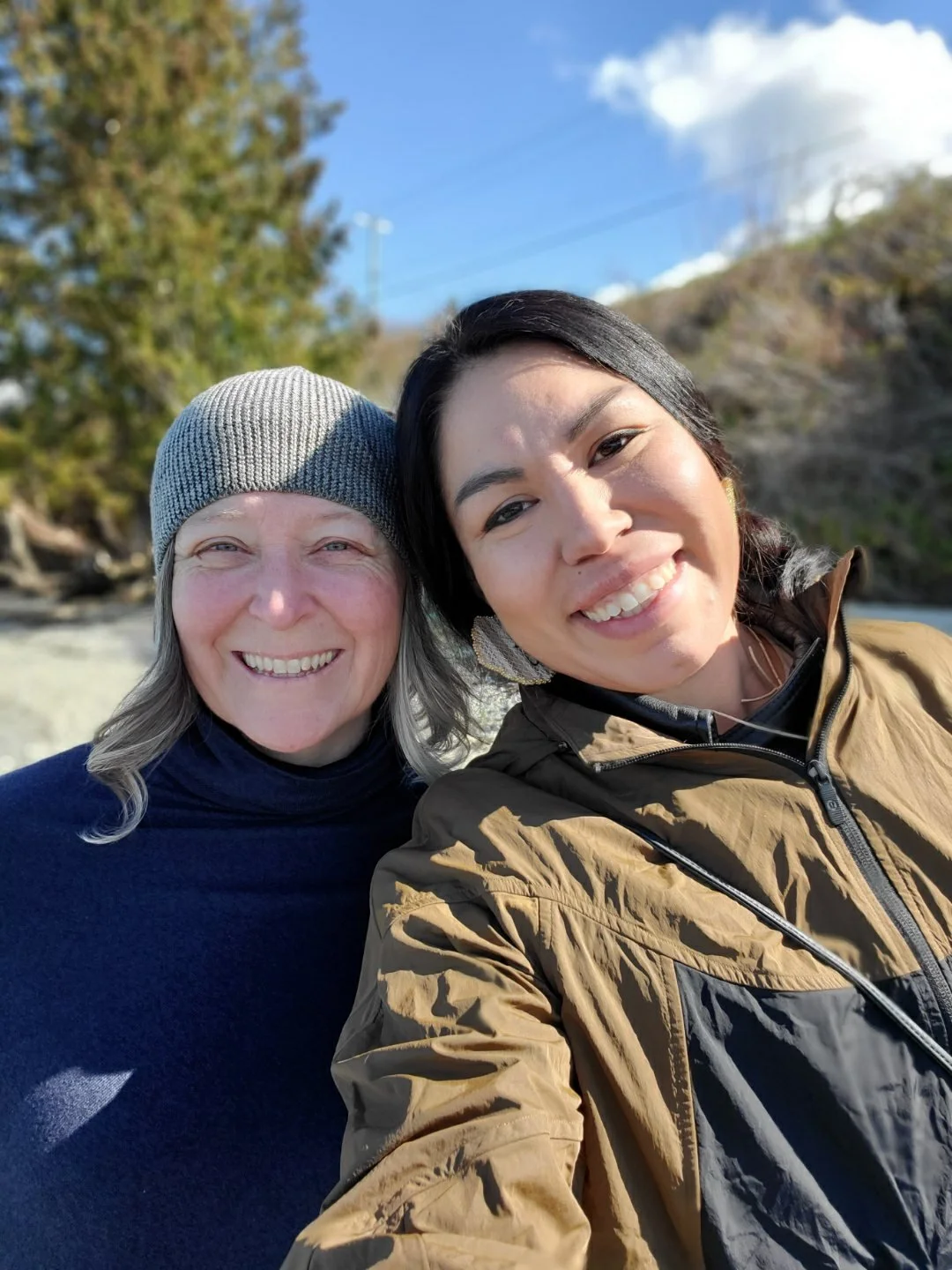
Lisa and Wendy in Tla’amin Territory
Wendy Simon (Haida/Mohawk), MSW, RSW, currently lives and learns on the traditional and unceded territories of the Coast Salish as an Indigenous facilitator, social worker, and advisor. Wendy’s work is community-informed and consistently begins with seeking permissions and developing relationships. Her trauma-informed practice honours the resiliencies and realities of peoples’ intersectionality throughout engagement. Understanding triggers and the importance of relationships, Wendy brings the strength of her lived experience, light heartedness, and helpful humor to the work.
Lisa Moffatt (she/her), MA, RPP, MCIP, CEC, is a white, cis-gendered woman who is (currently) not disabled. She is an uninvited guest and settler, born and raised on the traditional territory of the Beothuk (now known as St. John’s, Newfoundland and Labrador) and currently living and working as a community planner on the treaty territory of the ɬəʔamɛn First Nation.
As an award-winning planner, Lisa’s almost 20 years' experience includes leading multi-disciplinary teams in planning, design, sustainability, and community engagement while employing a collaborative working style to foster partnerships across agencies, different levels of government, and community groups. With a B.A. in Environmental Studies (Highest Honours), Carleton (2002) and an M.A. from the School of Community and Regional Planning, UBC (2005), she qualified as a full member of the Canadian Institute of Planners in 2009. Lisa was a Project Management Professional (PMP, 2016 - 2022) and completed a certificate from the International Association of Public Participation (IAP2, 2010). She is also a Certified Executive Coach (2019).
Lisa brings experience leading equitable engagement practices for local governments across planning topics.